How devotion, wellness, and resistance reshaped my relationship with singing.
I remember when I realized I didn’t want to perform anymore. I hadn’t lost interest in singing - I just lost interest in performing inauthentically. For years, my professional life was defined by opera, classical voice, and sacred music. My calendar was filled with rehearsals, masses, and concert programs, my identity tightly bound to being a performing artist. Yet, when the Black Lives Matter movement surged during quarantine, I faced a truth I could no longer ignore: I lost all of my performance work, work where I had spent my adult life performing literally and figuratively for white institutions and white audiences. I felt hypocritical. I spoke of liberation but lived inside roles that erased my selfhood, all for a dollar that probably wasn’t circulated in time. That awareness sent me to a mentally, emotionally, and spiritually dark place in 2020.
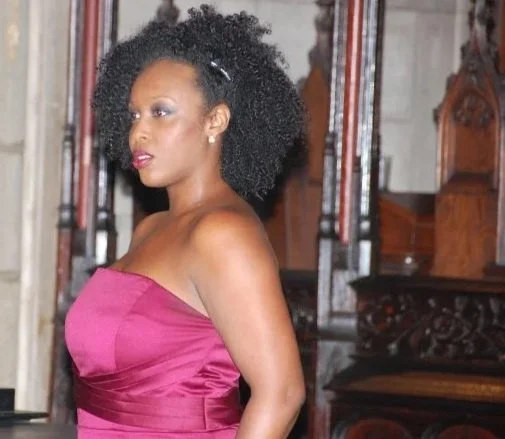
Shauna L. Howard, Germantown Institute for Vocal Arts - Philadelphia, PA 2008
I wasn’t alone in this reckoning. Scholars like Naomi André (Black Opera: History, Power, Engagement) reminds us that “opera is both an art form of transcendent beauty and a site where racial hierarchies are reinforced” (André, 2018). For Black musicians (especially women), the stage has long been a place of both opportunity and silencing. When Black Lives Matter movement forced cultural institutions to confront their own histories during the quarantine, I realized how often I’d been asked to leave pieces of myself offstage. “Performing whiteness,” as musicologist Kira Thurman calls it (Thurman, 2021) had shaped my career more than I wanted to admit. Yes, black lives matter; however, I wasn’t living or working as if my black life mattered. I knew better, so I chose a radical and transformative path. I bought a bicycle, sought out therapy, and immersed myself in Los Angeles’ endurance sports community. Late night fast food runs after singing and dancing was quickly replaced with a 5am alarm, 7 hours of rest, a cleaner diet filled with fresh juices and green smoothies, and most recently transcendental meditation. These habits became rituals to grieve the actor and performer I had been while nurturing the creator and educator that I was becoming.
These days, my devotion to music and singing shows up through coaching, mentoring, and wellness. I work with international students who are often encountering the pioneers of contemporary music for the very first time. For example, I introduced an aspiring independent artist to Chaka Khan’s anthology. Their eyes lit up as though they had uncovered buried treasure. “Why have I never heard of her before?” they asked. That moment clarified my role: I am the one who opens eyes, ears, minds, hearts, and doors to new musical worlds. That’s the joy I find in teaching. It’s not about applause - it’s about accepting a different kind of devotion to music.
Devotion matters MUCH more than love. I tell my students that being a musician doesn’t require constant love for music. Love is fickle while devotion endures. Caring for your voice is like caring for a pet: you may not feel ecstatic every moment, yet you feed them, walk them, and keep them safe out of commitment to their life and wellbeing. Singing asks the same of us. Devotion means showing up for your voice and your craft, even when the feeling isn’t glamorous or passionate. This reframing is vital in a culture that glorifies “constant passion.” When students stumble, they often believe something is wrong with them. In truth, devotion offers a steadier, more sustainable path. You don’t have to love your voice every day - you only have to honor it, tend to it, and care for it. That (at its core) IS love.
My devotion to performing found another outlet in endurance sports. Cycling, running, and yoga didn’t just strengthen my body - it reshaped my relationship to my body and singing. Cyclists and endurance athletes talk about “long climbs” and “holding the line” - singers talk about “long phrases” and “breath support.” Both require stamina, pacing, alignment, and trusting one’s body. Both demand devotion beyond fleeting motivation.
Research reinforces this connection. Singers are often called “vocal athletes,” with training demands that mirror sports (NATS Journal, 2024). Proper technique and posture not only prevent strain but also build long-term resilience (Voices Journal, 2023). Endurance work, in particular, expands respiratory capacity - directly enhancing vocal support (PMC, 2021). For me, every bike ride, workout, run, hike, etc. is also vocal training. Every meditation is breathwork that steadies the same nervous system I rely on in the studio and on stage. Endurance isn’t something I do on the side - it’s woven into my pedagogy.
The science is clear: singing itself heals.
Psychological benefits: Group singing improves mood, reduces depression, and fosters social connection (Clift & Morrison, 2011).
Physiological benefits: Singing reduces cortisol, boosts dopamine, and regulates breathing (Washington Post, 2025).
Chronic illness support: A pilot program with Welsh National Opera showed singing helped people manage chronic pain, with two-thirds reporting improved wellbeing (The Guardian, 2025).
These studies affirm what I have experienced: singing doesn’t have to mean performing to change lives. It can happen in a classroom, a sanctuary, a living room, or on a bike ride just to keep cadence.
This is the foundation of First Instrument, the sacred voice studio that I’m building. Our ethos is simple: your voice is sacred. We root every lesson in the Vishuddha chakra, the energy center of the throat. Just as the thyroid regulates the body’s balance, the voice regulates expression and identity. By aligning singing with wellness (breathwork, nutrition, movement, & reflection), we honor the whole instrument and not just the sound it makes.
Singers are humans carrying histories, joys, traumas, and dreams in our voices, not just machines that are expected to just execute. For this reason, I integrate social-emotional learning, positive psychology, music therapy principles, and anti-racism educational practices into the lessons. That might look like reflection circles where students name how they’re feeling before they sing (SEL), strength-based coaching that highlights what’s working in their voice instead of only correcting flaws (positive psychology), guided breathing or toning exercises to release tension and regulate the nervous system (music therapy & healing arts), and/ or repertoire discussions that honor the cultural roots while addressing appropriation and equity (anti-racism).
For most of my students, singing isn’t just about technique - it’s about liberation and cultural expression.
One student from China told me they’d always been shy about their voice. After weeks of combining breath exercises with journaling, they said: “I don’t just sing louder now - I speak louder too.”
Another student from Brazil shared that after working with chakra-based vocal warmups, they began using affirmations before exams. “I didn’t think singing could make me braver outside music,” they said.
These moments remind me why I teach. Performance may not call to me right now; however, holding space for my student’s presence and excellence using training fills me up.
Devotion to cultivating healthy voices is also resistance to the industry’s demand that Black singers perform only certain roles or genres/ styles, resistance to the erasure of cultural authenticity in favor of “universal” whiteness, and resistance to the idea that artistry is only valuable if it’s applauded. As bell hooks wrote, “Choosing wellness is an act of political resistance.” (hooks, Sisters of the Yam, 1993). By choosing wellness, I reclaimed my voice - not as a commodity, but as a sacred and unique instrument.
So if you’re a singer or someone questioning your relationship with music, here is what I would like to offer for your consideration:
You don’t need to perform to be a singer or a musician.
You don’t need to love music every day to be devoted to it.
You don’t need to sacrifice wellness for applause.
Your voice is sacred - it carries your story, your body, and the singular essence of your spirit. Care for it as you would someone you love - feed it, rest it, train it, exercise it, and listen to it. When the moment arrives (whether it’s on stage, in a classroom, or in the quiet of your home) sing - not for approval or applause, but out of devotion to knowing your own voice.
Thanks to being an endurance athlete, I trust my body to perform whenever the opportunity arises. As the saying goes: if you stay ready, you don’t have to get ready.
With love + vitality,
Shauna L. Howard
Founder, First Instrument
Citations:
André, Naomi. Black Opera: History, Power, Engagement. University of Illinois Press, 2018.
Thurman, Kira. Singing Like Germans: Black Musicians in the Land of Bach, Beethoven, and Brahms. Cornell University Press, 2021.
National Association of Teachers of Singing (NATS). “Vocal Athletes and Wellness.” Journal of Singing, 2024.
Clift, Stephen & Morrison, Ian. “Singing and Health: A Systematic Review.” Music and Health, 2011.
“Music and Chronic Pain Relief.” The Guardian, March 2025.
“How Music Boosts the Brain and Mental Health.” Washington Post, June 2025.
bell hooks. Sisters of the Yam: Black Women and Self-Recovery. South End Press, 1993.
