“Until a deposit drops, we’re all just speaking hypothetically.”
I found an old journal recently where I wrote this line and it hit me HARD - sharp, jarring, and undeniably true. At 46 years old, I’ve decided that I’m reframing all of my work experiences to support First Instrument as preparation: I’m now treating ALL of my past jobs are now “work studies” and ALL volunteer positions will now be considered “internships”, all in service of transforming into what I know I can be. This isn’t a delusion - it’s survival wisdom wrapped in strategic optimism, which has everything to do with the voice.
The Vagus Nerve Doesn’t Care About Your Vision Board
Let’s start with some uncomfortable (or maybe boring and overlooked) neuroscience. The polyvagal theory, developed by Dr. Stephen Porges, teaches us that our nervous system must perceive safety before we can access our higher cognitive functions, which includes creative expression, authentic communication, and what Porges calls “social engagement.”[1] The vagus nerve, which innervates our larynx and affects vocal production, is exquisitely sensitive to any form of perceived threat.
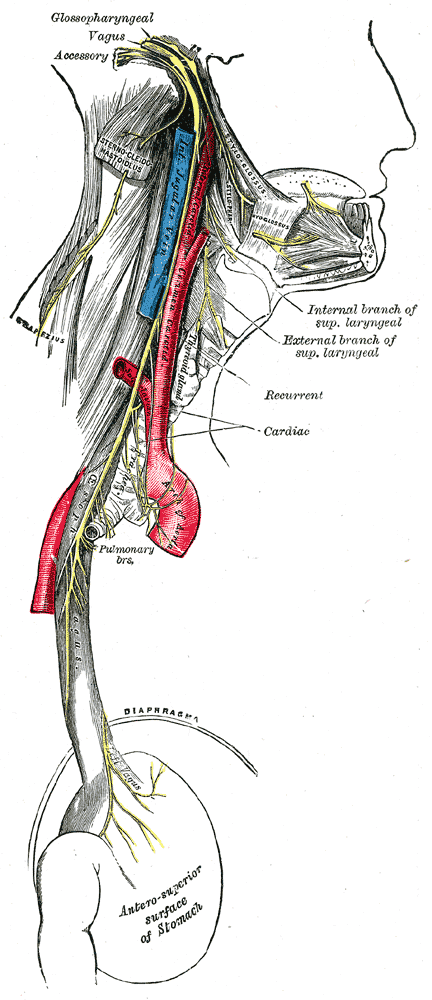
Financial instability registers as a threat. Not a theoretical threat, but the kind that lives in your body: the cortisol spike when you check your bank account, the shallow breathing when an invoice goes unpaid, the chronic tension in your jaw and throat when you’re not sure how you’ll make rent. Research on financial stress demonstrates measurable physiological impacts. A 2016 study published in Social Science & Medicine found that financial strain activates the same neural pathways as physical pain, triggering inflammatory responses and dysregulating the hypothalamic-pituitary-adrenal (HPA) axis.[2] When your HPA axis is dysregulated, your body diverts resources from “thriving” functions to “surviving” functions.
This is where traditional vocal pedagogy fails us. We can talk about breath support, resonance, and artistry all day long; however, if a singer’s nervous system is stuck in dorsal vagal shutdown because they don’t know where next month’s income is coming from, no amount of technical correction will unlock their authentic voice. Yes, your voice is sacred; however, it’s hard to live and lead with a sacred voice when you’re in survival mode or stressed.
The Hidden Curriculum: What We Learn When We’re “Just” Volunteering
The dominant narrative around entrepreneurship and creative careers is one of tireless hustle, passion projects that somehow magically monetize, and the idea that if you’re good enough and want it badly enough, success is inevitable. This narrative is not only incomplete - it’s gaslighting. In her groundbreaking work on the “hidden curriculum” in education, sociologist Elizabeth Armstrong demonstrates how middle-class and wealthy students arrive at university already fluent in unspoken rules about networking, self-advocacy, and navigating institutional systems - knowledge that working-class students must acquire through trial and error, if they acquire it at all.[3]

Photo by Juan Gomez on Unsplash
The same principle applies to creative entrepreneurship. When I reframe my past jobs as “work studies,” I’m not engaging in semantic gymnastics. I’m acknowledging a truth that capitalism doesn’t want us to name: most of us are learning skills that privileged people receive as birthright. We’re acquiring cultural capital through lived experience because we weren’t handed the instruction manual.
My own path illustrates this perfectly. When my parents failed to support me in music school,, I pivoted to a two-year music therapy internship in college - unpaid work that gave me clinical training in how music affects the nervous system, how to work with trauma survivors, and how to create healing experiences through sound - something that was easy for me to recognize since I was a child raised in the church seven days a week. I witnessed how choir rehearsal was a spiritual practice, a mid-week collective healing opportunity, an emotional safe haven, a form of nervous system regulation, and more LONG before I had the language for it. That knowledge became fundamental to everything I do now; however, at the time, it was just what I could access when the “proper” path was closed to me.
A few years later, I received a scholarship to pursue certification in Applied Positive Psychology from The Flourishing Institute - paying for my own professional development while working contract roles in the performing arts, nonprofit development in healthcare and small business, and more. During the pandemic, I took an operations role on the anti-racism team at The Achievement Network, providing anti-racism training to school districts - work that taught me how systems perpetuate inequity and how to dismantle them. Over the past two years, I rode my bike from Hollywood to Watts to facilitate social emotional learning with Calibrate at San Miguel Catholic School, translating psychological research into practical classroom applications.
I folded everything I’ve learned on every job and board that I served on and applied it to teaching my voice students. My Vocal Technique II class has become a popular place for students to hang out & share what they’ve learned about performing with other international singers. In June 2025, I was laid off from teaching music at EF Academy due to poor enrollment - one of over 300,000 Black women who lost their jobs in 2025.[9] The statistics are staggering. The lived experience is crushing, but it’s also clarifying.
Every single one of these experiences was “alternative.” None followed the conservatory-to-performance-career trajectory that classical vocal training prescribes. But together, they gave me an education that no music school could provide: an integrative understanding of voice that encompasses neuroscience, psychology, social justice, and healing arts.
That unpaid music therapy internship? That’s clinical training that music therapists now pay graduate school tuition to receive.
That scholarship-funded Applied Positive Psychology certification while juggling contract work? That’s the kind of professional development that executives pay consulting firms thousands of dollars to access.
That operations role in anti-racism work during a global pandemic? That’s DEI leadership experience that organizations desperately need and chronically undervalue.
That bike ride from Hollywood to Watts to facilitate SEL? That’s educational consulting and community-engaged pedagogy that universities claim to value but rarely compensate appropriately.
And those seven-days-a-week church choir rehearsals as a child? That was my first education in how voice builds community, regulates nervous systems, and creates spaces where people can both grieve and celebrate together - an embodied understanding that preceded and informed every formal framework I would later study.
The work was real. The learning was absolutely real. The fact that I wasn’t compensated appropriately doesn’t diminish its value - it reveals the economic structures that determine whose development counts as “professional” and whose is dismissed as “just getting by.” When over 300,000 Black women lose their jobs in a single year, we’re not talking about individual failures. We’re talking about systemic patterns that determine whose labor is valued, whose expertise is recognized, and whose economic security is deemed expendable. All of this helps me to use my skills, aptitude, talent, knowledge, and resources to advocate for the holistic health and wellbeing of artists, arts administrators, and creative entrepreneurs as a board member with Wellbeing in Entertainment and Creative Arts while teaching singers and vocalists how to honor their sacred voice at Musicians Institute and First Instrument.
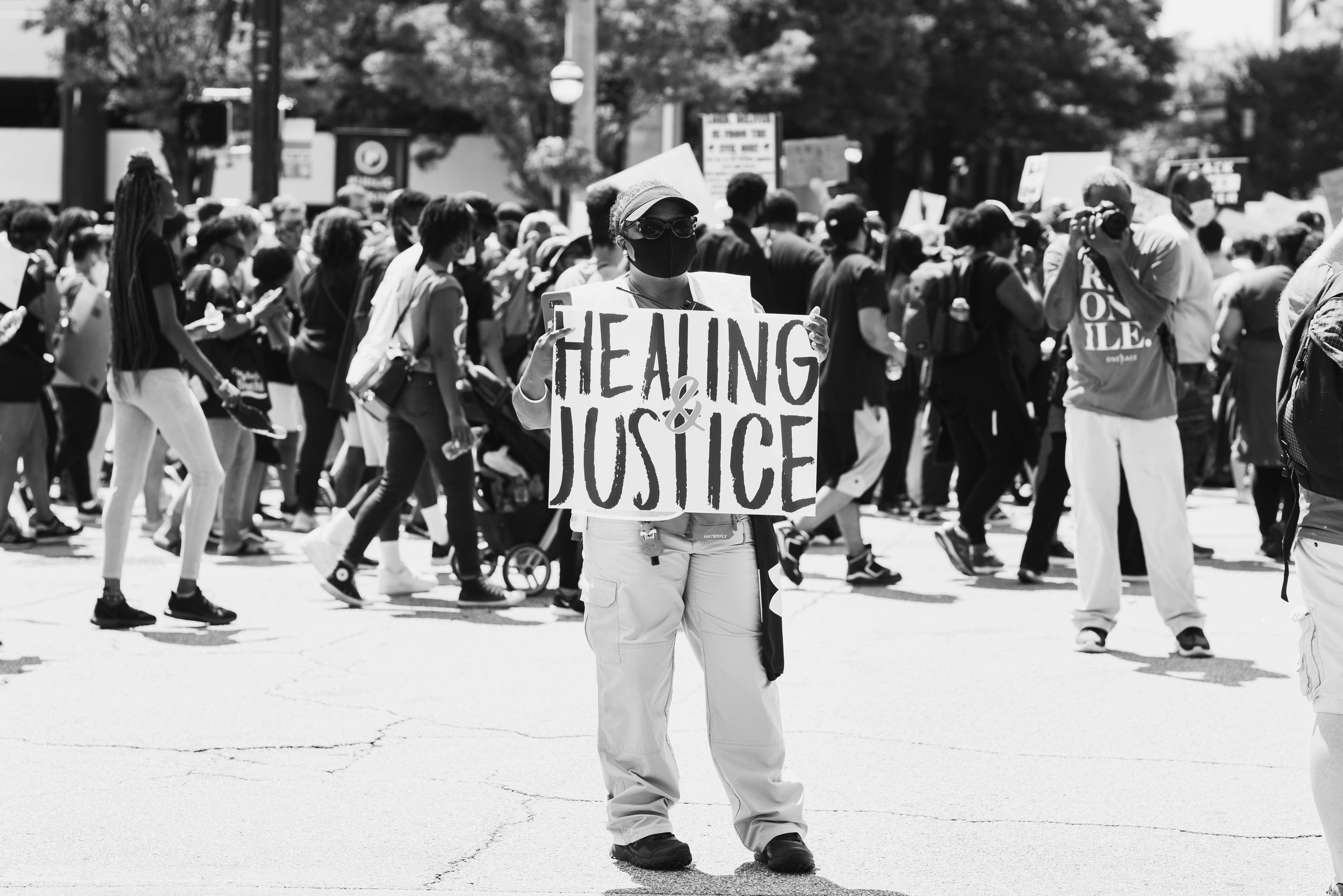
Photo by Corey Young on Unsplash
This is where Integrative Vocal Wellness becomes more than pedagogy - it becomes a framework for economic justice, especially for singers and vocalists. Traditional voice training (especially in Western classical tradition) has historically been accessible primarily to those with economic privilege. Conservatory education requires not just tuition but the ability to forgo income during years of training, to pay for private lessons, and to purchase expensive repertoire and coaching. Dr. Trineice Robinson-Martin’s work on the “culture-bearer” pedagogy explicitly names how European classical techniques have been privileged while culturally responsive approaches (particularly those from African-American traditions) have been marginalized.[4] The economic barriers to vocal training mirror larger patterns of who gets to claim expertise, whose knowledge is valued, and whose voice literally and metaphorically gets heard.
Integrative Vocal Wellness, as I’ve developed it, explicitly resists this gatekeeping. It combines voice science with healing arts rooted in music therapy, positive psychology, social-emotional learning, and anti-racism education precisely because authentic vocal development cannot happen in economic, cultural, or psychological isolation. Your voice exists in a body that exists in economic systems that determine whether you eat, whether you have healthcare, whether you can afford the time to develop your artistry. When we ignore these realities, we’re not just being impractical - we’re being complicit in systems that tell certain people their voices don’t matter.
The Transformation Timeline: Why You’re Not Too Old (And Other Lies We’ve Been Told)
Developmental psychology has long been obsessed with youth. Erik Erikson’s stages of psychosocial development famously position middle adulthood (ages 40-65) as a period of “generativity vs. stagnation” - implying that by your forties, you should be established enough to mentor others, not still figuring out your own path.[5] Emerging research on adult neuroplasticity tells a different story. Studies using neuroimaging have demonstrated that the adult brain remains remarkably capable of forming new neural pathways, learning new skills, and reorganizing itself in response to experience well into older adulthood.[6] The myth that we become fixed in our ways after 25 is precisely that - a myth. More importantly, research on “encore careers” and midlife transitions shows that people who make significant professional changes in their forties and fifties often report higher levels of meaning and life satisfaction than those who remain in established but unfulfilling careers.[7] The key variable isn’t age - it’s agency.

Photo by Naoki Suzuki on Unsplash
When I claim my past experiences as preparation rather than failure, I’m exercising that agency. I’m refusing the narrative that says transformation has a deadline. I’m acknowledging that the person I’m becoming at 46 has been shaped by every job that undervalued me, every volunteer position that taught me resilience, every bike ride from Hollywood to Watts, every board I served on, every layoff that told me I was expendable, every moment I chose to keep developing my voice even when the economics didn’t make sense.
This is the sacred voice work that no conservatory teaches: the practice of maintaining belief in your own becoming when external validation is withheld.
The Deposit as Threshold: Material Reality and Spiritual Practice
I want to be clear about something: I’m not preaching this as manifestation culture. I’m not suggesting that positive thinking or reframing will magically produce income. The deposit—the actual money in the actual bank account—matters. What I am suggesting is that the period before the deposit drops is not wasted time - it’s the crucible. In alchemical tradition, the nigredo (the first and the darkest stage in the alchemical process) is necessary for transformation. The base metal cannot become gold without first being broken down completely. I named my holding company Creative Alchemy Alliance for this reason: I understand that transformation requires both spiritual practice and material change.
Integrative Vocal Wellness includes nervous system regulation techniques - breathwork, somatic practices, meditation (I came to Transcendental Meditation in 2025 specifically for this purpose) - not as substitutes for economic justice, but as tools for maintaining our humanity while we navigate unjust systems. Active hope (unlike passive optimism) involves clear-eyed acknowledgment of challenging circumstances combined with committed action toward desired outcomes.[8] It’s the practice of treating your current reality as real while simultaneously working toward transformation. When I treat past jobs as work studies, I’m practicing active hope. I’m saying: this economy may not value my labor appropriately, but I’m extracting every bit of learning I can because that knowledge serves my transformation. The deposit will eventually drop (because I’m building something real) and when it does, I won’t be starting from scratch. I’ll be arriving with a PhD in Sacred Voice and Creative Entrepreneurship from the School of Hard Knocks from University of Survival Economics.
What All of This Means for Your Voice
If you’re reading this and it’s resonating with where you are, here’s what I want you to know - your voice cannot be separated from your lived experience. The financial stress you’re carrying lives in your throat. The jobs that undervalued you have taught you resilience that shows up in your vocal stamina. The years of “figuring it out” have given you interpretive depth that no amount of technique alone could provide. The work is to:
Acknowledge the material reality without shame. Financial struggle under capitalism is a structural issue, not a personal failing.
Extract the learning from every experience, including the exploitative ones. Leave the bitterness in the exit interview - the knowledge is yours to keep.
Regulate your nervous system so that survival stress doesn’t permanently reshape your instrument. This is why breathwork, meditation, and somatic practices are not luxuries - they’re necessary maintenance.
Build toward the deposit with strategic clarity while refusing to internalize the lie that you’re behind schedule.
You’re not too old. You’re not too late. You’re exactly where you need to be to become who you’re meant to be. Until the deposit drops, we practice the sacred work of speaking our truth anyway - not hypothetically, but with the full-bodied conviction of people who know that transformation doesn’t wait for permission or perfect circumstances…
It begins the moment we claim our voice as worthy, regardless of what white supremacy and capitalism have paid us for it.
References:
[1] Porges, S. W. (2011). The Polyvagal Theory: Neurophysiological Foundations of Emotions, Attachment, Communication, and Self-regulation. W.W. Norton & Company.
[2] Sturgeon, J. A., et al. (2016). “Social pain and physical pain: Shared paths to resilience.” Social Science & Medicine, 146, 197-207.
[3] Armstrong, E. A., & Hamilton, L. T. (2013). Paying for the Party: How College Maintains Inequality. Harvard University Press.
[4] Robinson-Martin, T. (2016). “So You Want to Sing Gospel: A Guide for Performers.” Journal of Singing, 73(2), 197-203.
[5] Erikson, E. H. (1982). The Life Cycle Completed. W.W. Norton & Company.
[6] Voss, M. W., et al. (2013). “Plasticity of brain networks in a randomized intervention trial of exercise training in older adults.” Frontiers in Aging Neuroscience, 5, 32.
[7] Moen, P., & Flood, S. (2013). “Limited Engagements? Women’s and Men’s Work/Volunteer Time in the Encore Life Course Stage.” Social Problems, 60(2), 206-233.
[8] Macy, J., & Johnstone, C. (2012). Active Hope: How to Face the Mess We’re in without Going Crazy. New World Library.
[9] U.S. Bureau of Labor Statistics, Employment Situation Reports (February-April 2025); National Women’s Law Center analysis (2025). Between February and April 2025, approximately 300,000-320,000 Black women lost their jobs. Black women’s unemployment rate rose from 5.1% to 6.1% in April alone, with 106,000 jobs lost in that single month—the largest decline of any demographic group. Analysis cited in: “Jobs report: Rise in Black women’s unemployment could be economic sign,” 19th News, July 3, 2025; Congressional testimony by Rep. Ayanna Pressley calling the losses “a crisis.”
